Predictive control in mixed traffic
A predictive controller that lets an autonomous vehicle use traffic data broadcast by the cars around it — 26% less energy and 5% less travel time over a 10 km route.
The problem
An autonomous vehicle in mixed traffic is guessing. It can see the car in front, but not what that car is about to do, and certainly not what the traffic two lanes over is doing. Every lane change is therefore committed to on incomplete information — and a manoeuvre started on a gap that closes is worse than no manoeuvre at all.
Approach
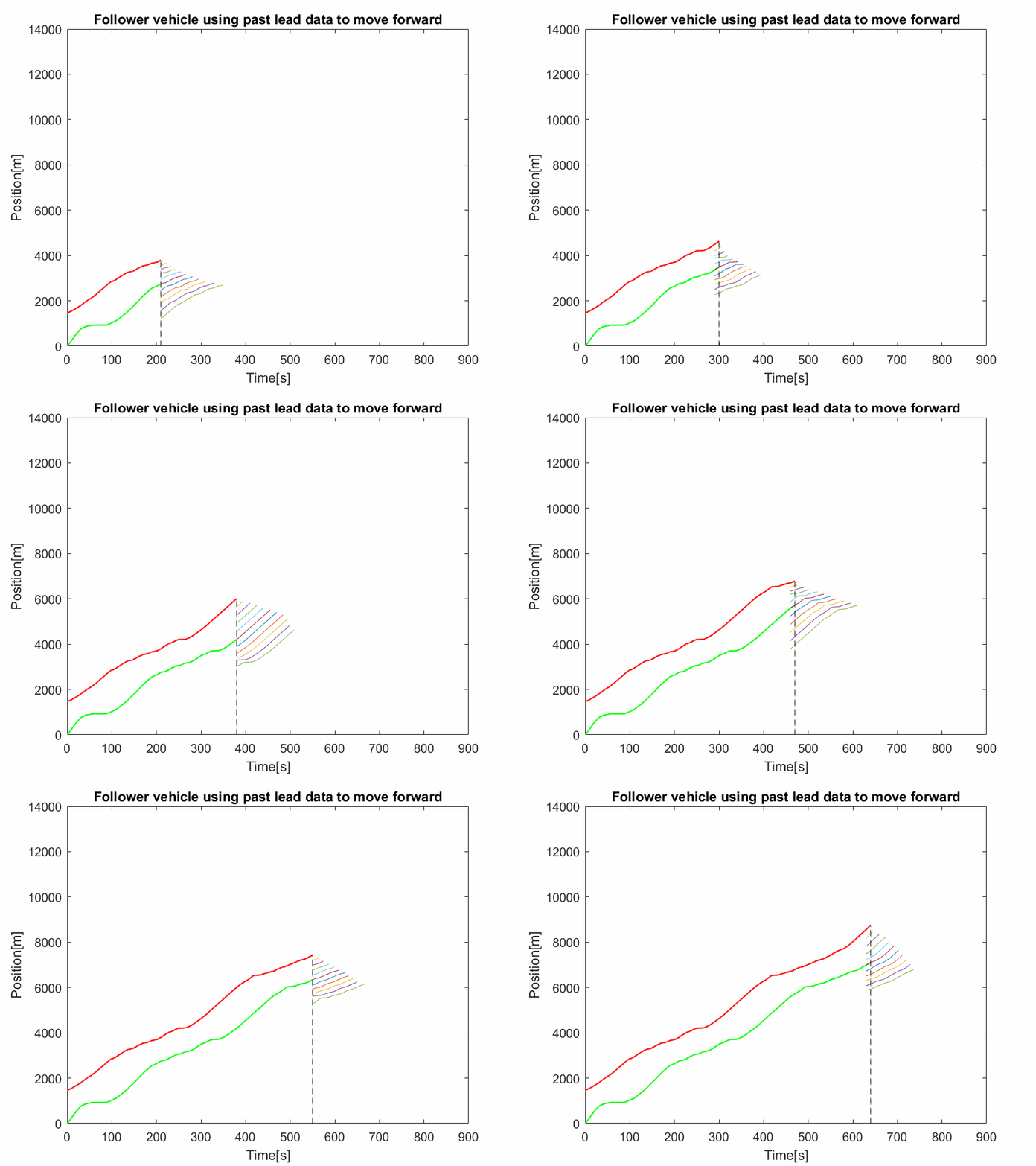
If the surrounding vehicles broadcast their state, the ego vehicle can plan against something better than a guess. The controller takes V2X data from three lead vehicles across different lanes, collected in real time through a Commsignia unit, and solves for a whole trajectory over a horizon — applying only the first command, then re-solving with fresh data at the next step. Constraints go into the optimisation directly: stay in lane bounds, keep clear of the others, keep lateral acceleration inside what a passenger would accept.
Result
Over a 10 km route, the predictive controller cut energy consumption by 26% and travel time by 5% against the baseline. The energy figure is the interesting one — most of it comes from not braking for situations that were visible several seconds earlier.
On the bench